Back to Updates
Building An NFL Draft Value Chart
Note: This project was done jointly between the NFL and researchers Quang Nguyen and Ron Yurko from the Carnegie Mellon Sports Analytics Center.
Draft position value charts have long been a staple for NFL front offices. These charts estimate the expected performance value of every pick, and can be used to assess the relative value of each team’s draft haul and to evaluate draft day trades. The most popular version is the Jimmy Johnson chart, used for decades, but there are several alternative versions out there.
But player performance is highly variable, which leads to the question – how to account for the boom-or-bust reality of the draft? How can the elite ceiling and the worst-case floor of a pick be estimated?
To measure pick value, we use a player's average Madden rating from years three through five in their career, based on data from 1997 to 2023. These ratings are recorded at the start of years three through five, so they reflect player quality displayed in years two through four. This aligns with the period when players typically become eligible for and negotiate their second contracts. Note that we use the average rating in years three and four for the 2022 draft class, along with the year three rating for the 2023 draft class.
We then fit statistical models to estimate the floor (10% quantile), expected, and ceiling (90% quantile) values of every draft position. The following chart shows estimated floor, average, and ceiling performance by draft position.
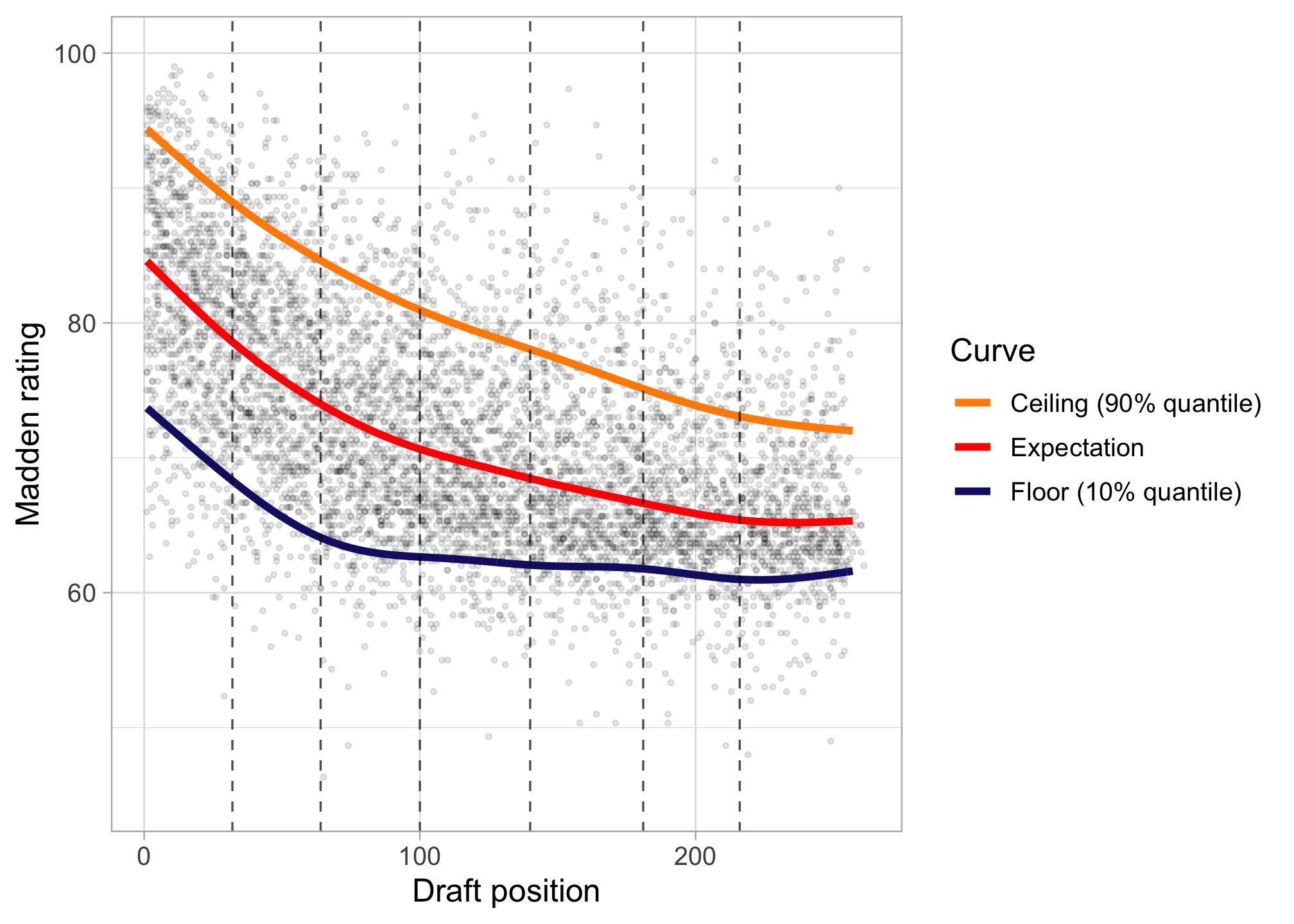
Unsurprisingly, all three curves decline as the draft progresses. Early selections have the highest ratings, followed by a steady drop that begins to flatten by the mid-to-late rounds. Most first-round picks have ceilings above 90, which are generally elite-level players. The floor curve flattens by Rounds 3-4, while the ceiling and average curves continue to decline late in the draft. This asymmetry likely reflects censoring rather than true talent differences, as players that do not play into years three through five are pooled into a common low-performance group.
Using our models, we can derive different metrics to quantify the value of each draft pick, including:
- Surplus value: The difference between the actual and expected ratings of players historically taken at a given draft position.
- Steal score: The difference between the actual rating and predicted ceiling (90% quantile), for players who exceed their predicted ceiling.
- Bust score: The difference between the predicted floor (10% quantile) and actual rating, for players who fall below their predicted floor.
As examples of the biggest draft day hits, Richard Sherman, George Kittle, Brock Purdy, and Tyreek Hill each lead their respective positions based on our Surplus value metric.
Which teams have been the best and worst at drafting (2011-2023)?
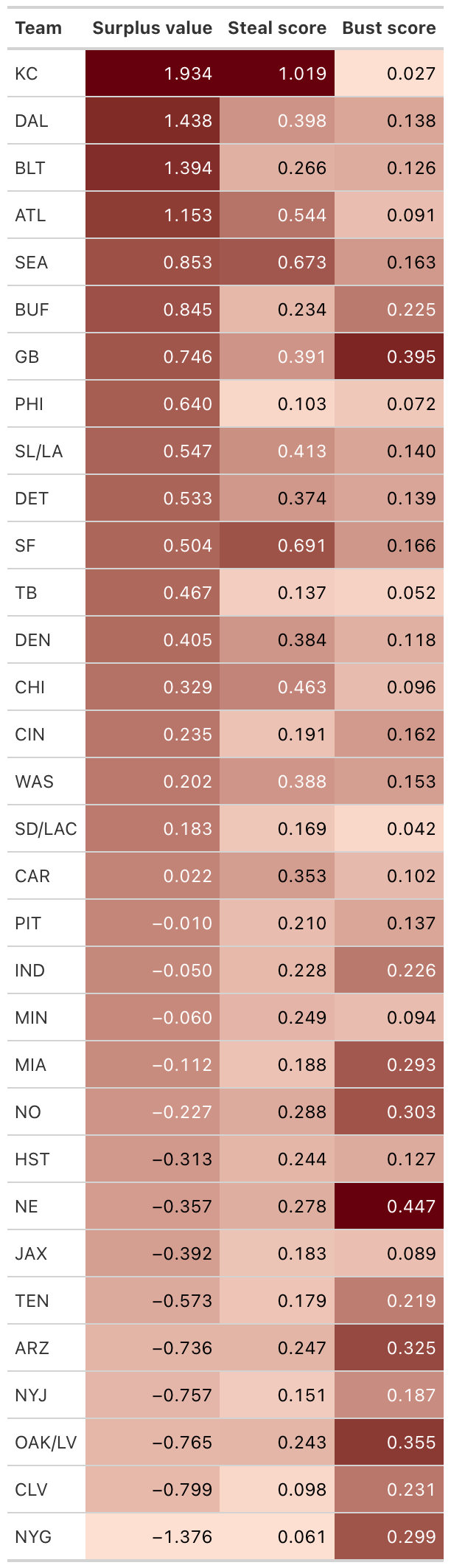
The following table shows the draft performance of NFL franchises from 2011 to 2023. The Kansas City Chiefs have arguably drafted the best during this window of time, with the most surplus value, along with the highest steal score and a bust score close to zero. Our results also capture the frustration of fanbases in New York and Cleveland, as the Giants and Browns have the lowest values below expectation. Note that this table does not include draft day trades, which could increase or decrease the relative haul of each club.

NFL Football Operations’ mission is to establish a culture of clarity, consistency and credibility in all aspects of the greatest game. Football is an essential piece of America’s fabric, uniting fans, players and communities with a simple yet powerful bond. We honor the game’s history while continuing to innovate and preserve the sport for future generations of fans, players, coaches, teams and officials.
© 2026 National Football League. All rights reserved.