Back to Updates
Introducing the NFL Draft Tier Chart
Note: This project was done jointly between the NFL and researchers Quang Nguyen and Ron Yurko from the Carnegie Mellon Sports Analytics Center. NFL fans can interact with this research through the NFL IQ platform. Fans can ask simple questions like "What is the chance of getting a superstar at the end of the first round?" or more specific questions about whether a team should trade back.
For years, teams and analysts have leaned on traditional draft value charts (e.g., Jimmy Johnson chart) for pick valuation. Draft charts assign a single value to each pick number, offering a convenient way to compare trades and quantify draft capital.
But what about the possible outcomes that any given pick can produce?
Building off our post from earlier this week, and using data from 1997 to 2023, we define the following tiers of player quality based on the average year three through five Madden ratings. Note that we use the average rating in years three and four for the 2022 draft class, along with the year three rating for the 2023 draft class.
- 93 and above: Superstars
- 88-93: Elite, Blue-Chip, All-Pro
- 81-87: Reliable starters
- 71-80: Stopgaps, Role players
- 64-70: Backups
- 63 and below: Roster fillers
The following chart shows how the probability for each rating tier evolves across the draft, obtained from an ordinal generalized additive model. This captures both the upside and risk associated with every pick selection.
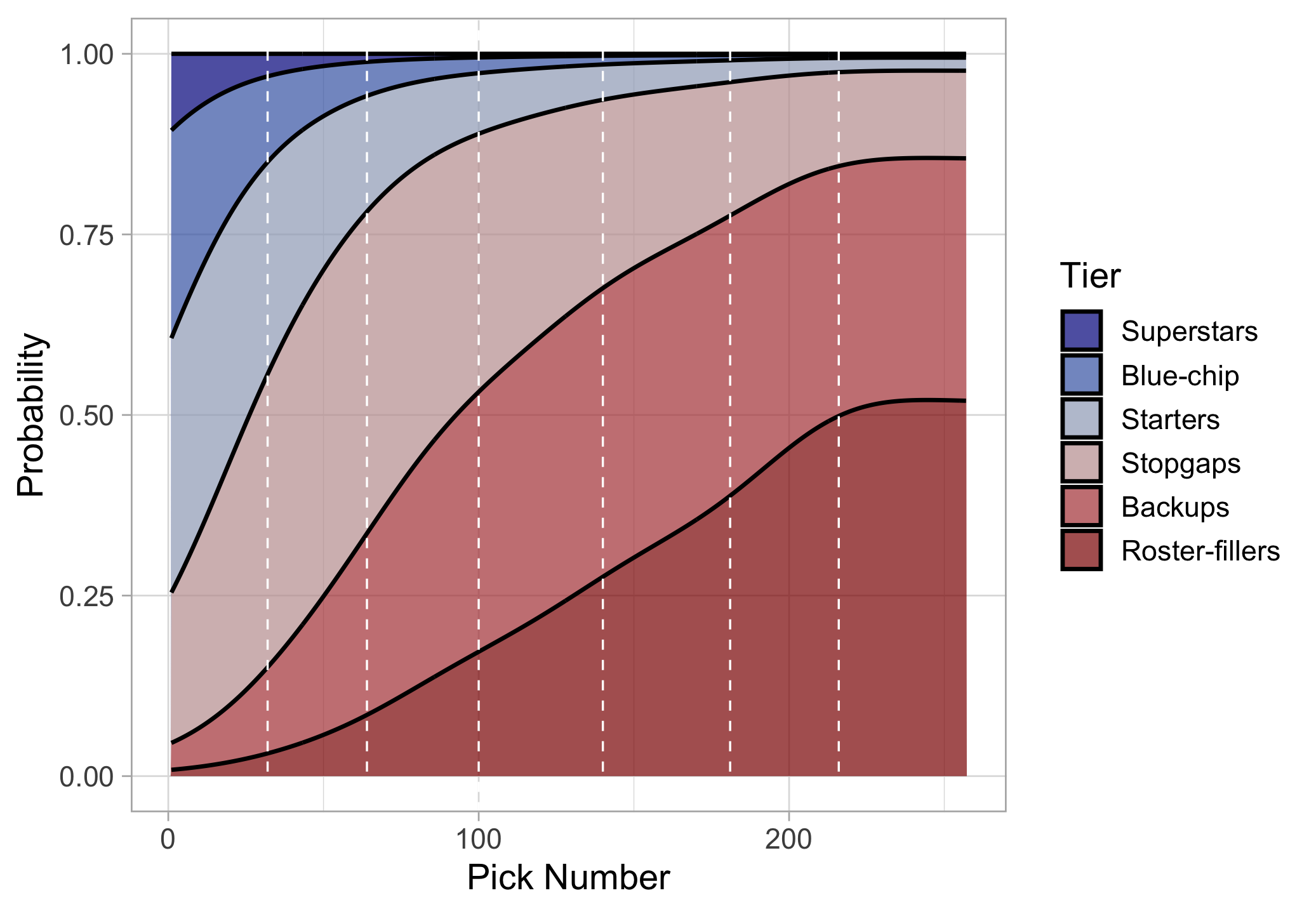
- Elite talent disappears fast: The probability of landing a superstar or blue-chip player drops quickly within the first two rounds. Most of the truly elite outcomes are concentrated right at the top of the draft.
- Round 1 is a tier transition zone: Early in draft, it is very likely to get at least a reliable starter. By the end of the first round, this is much closer to a coin flip. So as Round 1 progresses, there's a shift from getting a surely impact player to a hopeful contributor.
- The middle rounds are the murky middle: Star outcomes are rare. Starter outcomes are uncertain. Stopgaps and backups dominate. This is where teams are often choosing between upside swings and safer but lower ceilings.
- Roster-fillers dominate late rounds: Later in the draft, the upside tiers are almost gone. Teams are mostly drafting for depth, special teams, or long-shot development.
- Diminishing returns are nonlinear: The difference between pick 5 and 25 is much larger than between pick 150 and 170. Early picks carry disproportionate value in terms of outcome quality.
- There’s always some chance of value late: Even deep into the draft, the curves for higher tiers never hit zero. This reflects the occasional late-round gems. But the probabilities are tiny.
These tiers also help define the relative value of each pick. That is, whether a team is after a superstar or just a consistent starter can drive the importance of a specific pick.
To illustrate, the following figure compares the relative value of each pick across five different curves. The orange curve shows the classic Jimmy Johnson trade value chart, and the green curve shows another popular curve from Over the Cap. The three curves in dark blue (superstar value), royal blue (blue-chip or better), and light blue (starter or better) are based on our tier-based valuation of each pick.
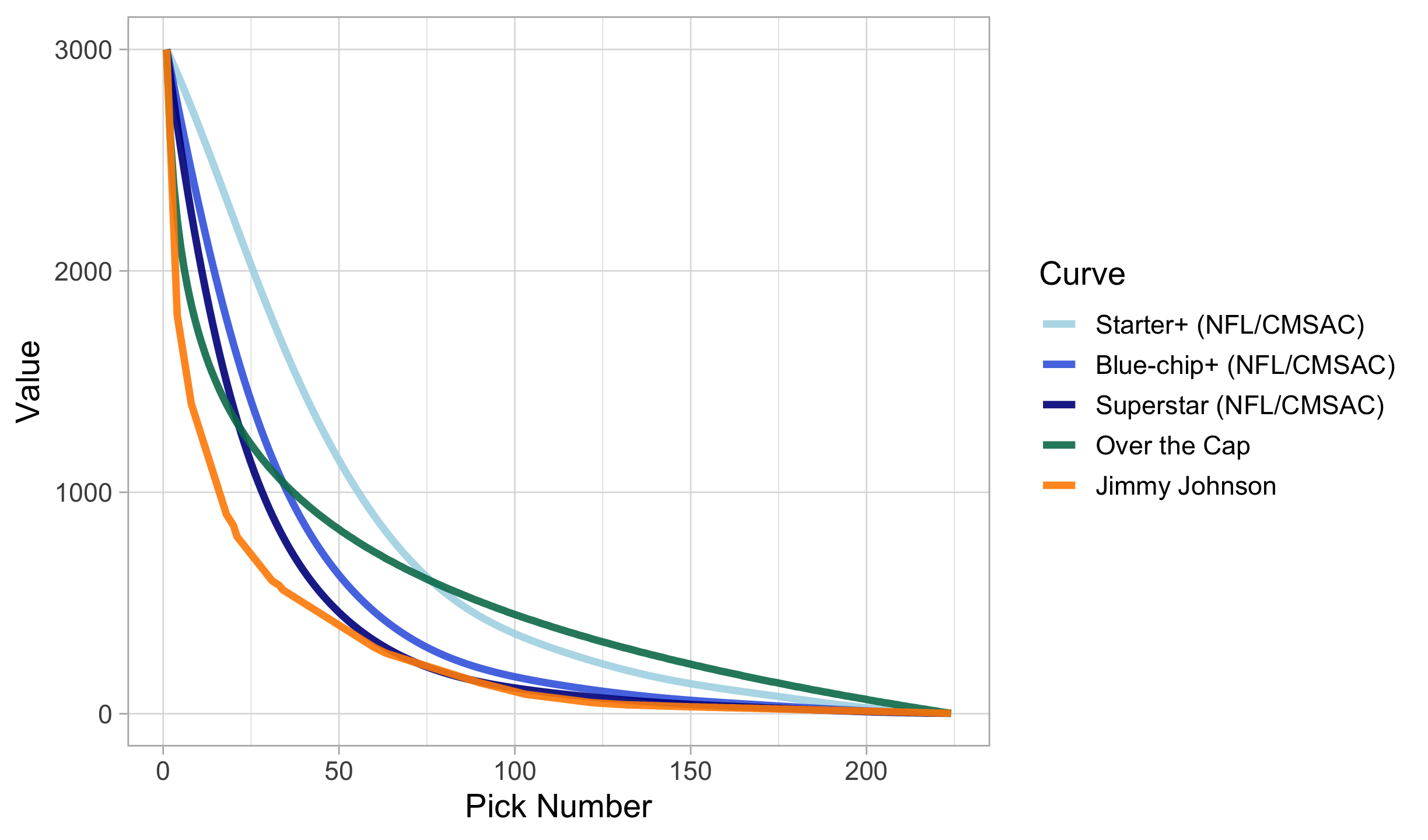
Relatively speaking, the Jimmy Johnson curve is the steepest, with the highest emphasis on early picks. Alternatively, our curves suggest higher superstar value in the first 25 or so picks, with a similar valuation for picks beyond 50. The flattest curve is our Starter+ curve, which suggests that if a team is only seeking starter-level players, it may be better off acquiring multiple later-round picks.

NFL Football Operations’ mission is to establish a culture of clarity, consistency and credibility in all aspects of the greatest game. Football is an essential piece of America’s fabric, uniting fans, players and communities with a simple yet powerful bond. We honor the game’s history while continuing to innovate and preserve the sport for future generations of fans, players, coaches, teams and officials.
© 2026 National Football League. All rights reserved.